Sequential Play Pathways: Athletic Wagers Feeding Into Dealer-Led Sessions Within Unified Mobile Ecosystems
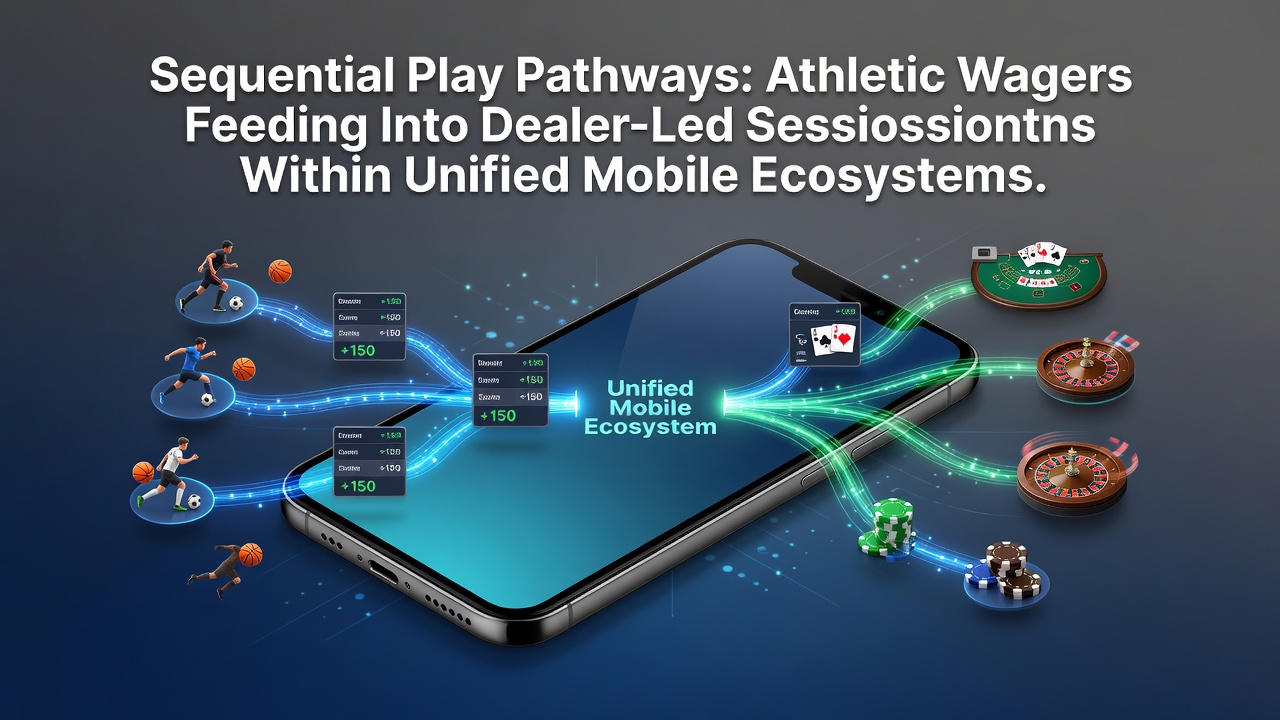
Sequential play pathways link athletic wagers directly to dealer-led sessions through unified mobile platforms where users move from sports markets into table games without leaving a single application environment. These systems track activity across categories and apply shared loyalty mechanics so that results from one area influence access and rewards in another. Data from multiple operators shows that integrated pathways increase session duration when sports outcomes trigger live dealer bonuses or table access.
How Pathways Operate in Practice
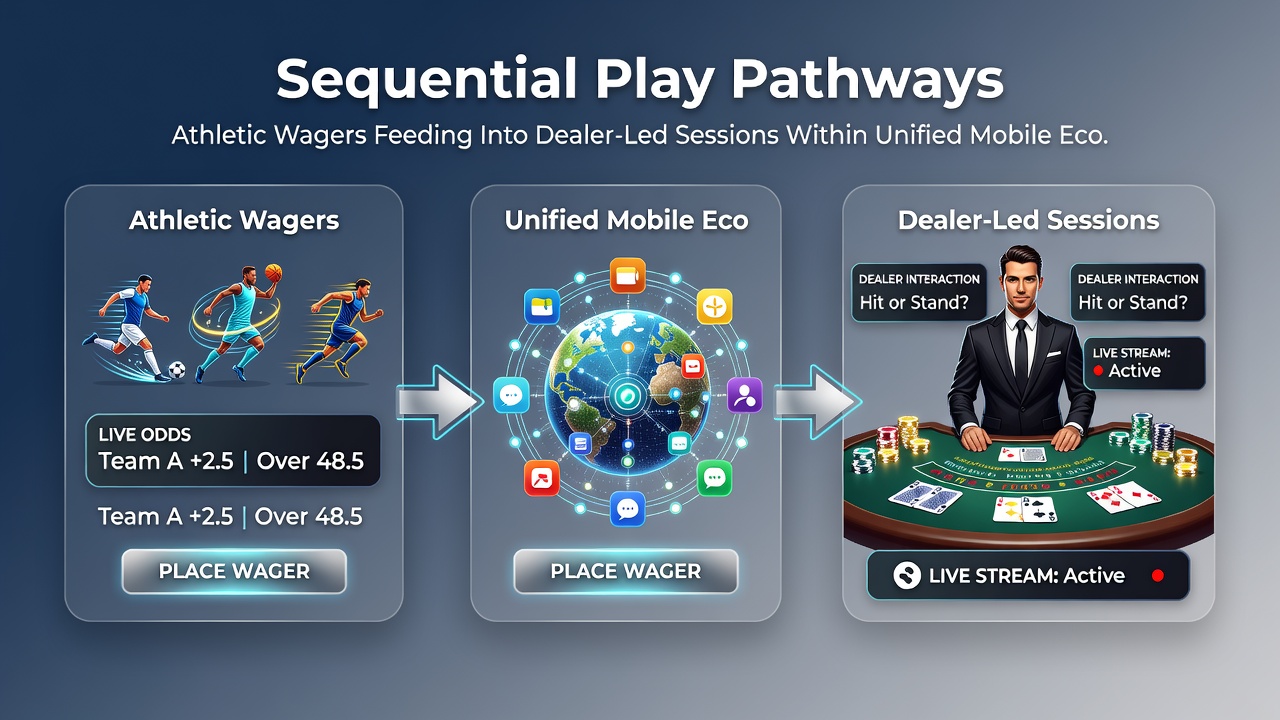
Operators design these sequences so that a completed sports bet meets predefined thresholds and then unlocks entry into live dealer environments such as blackjack or roulette. The mobile interface presents the transition as a continuous flow rather than separate launches, with account balances and progress indicators remaining visible throughout. In July 2026 several platforms expanded these mechanics to include real-time notifications that guide users from sports results into scheduled dealer tables within the same session.
Technical architecture relies on shared player profiles that store both sports and table game data in a single database. When a user places an athletic wager the system records stake size, outcome, and any applicable multipliers then applies those values to eligibility rules for dealer-led games. This approach eliminates the need for separate logins or wallet transfers between product verticals.
Mobile Ecosystem Features Supporting Integration
Unified mobile applications combine sportsbooks and live dealer studios under one navigation structure so users encounter both categories on the same home screen. Push notifications and in-app banners highlight sequential opportunities such as converting a sports win into live table credits. Backend systems synchronize game availability across devices which allows a user to begin a sports bet on a phone and continue into a dealer session on a tablet without interruption.
Operators report that these ecosystems reduce user friction because payment methods, verification status, and loyalty points remain consistent across categories. Platform updates in mid-2026 introduced improved handoff animations and persistent session states that preserve context when switching from athletic markets to card tables.
Usage Patterns and Performance Data
Industry reports indicate that platforms with sequential pathways record higher cross-category participation rates compared with standalone sports or casino products. Figures from North American operators show that users who complete a sports sequence enter dealer sessions at rates approximately 25 percent above those who navigate directly to tables. Similar patterns appear in data shared by Australian regulatory filings where integrated mobile offerings correlate with increased average revenue per user across both verticals.
One study released by the Gambling Research Centre at the University of Sydney examined mobile play logs and found that sequential triggers reduced drop-off between product types. The analysis covered multiple operators and noted that players who received pathway prompts completed more dealer-led rounds on average than those without such prompts.
Performance metrics also track retention after sequence completion. Users who move from athletic wagers into dealer sessions within the same hour show elevated return rates over the following seven days according to internal operator dashboards. These measurements guide further refinements to bonus structures and notification timing.
Regulatory and Compliance Elements
Regulatory bodies in several jurisdictions require clear separation of sports and casino products while still permitting integrated interfaces. The Nevada Gaming Control Board maintains guidelines that address how operators must display distinct licensing information for each vertical even when housed in one application. Compliance teams implement audit trails that record each step of a sequential pathway to verify that age and location checks remain active throughout the transition.
Canadian provincial frameworks similarly address unified mobile systems through requirements for responsible gaming tools that apply across all game types. Operators must ensure that self-exclusion settings and deposit limits function consistently whether a user engages with sports markets or dealer tables. Updates published in 2026 emphasized real-time monitoring of pathway triggers to prevent unintended encouragement of continuous play.
Examples from Current Platforms
Several major operators have deployed sequential pathways that connect sports results to live dealer access. One system awards table credits based on parlay outcomes while another uses sports win streaks to unlock private dealer rooms. These implementations share common backend logic that calculates eligibility and applies rewards without requiring users to navigate separate menus.
Additional case examples involve partnerships between sportsbooks and live dealer providers where joint promotions appear inside the same mobile shell. Players receive prompts that link a recent sports result to an available dealer table and the transition occurs within the existing application window. Observers note that such arrangements rely on standardized APIs that exchange player status data securely between the two product teams.
Conclusion
Sequential play pathways continue to shape how athletic wagers connect to dealer-led sessions inside unified mobile ecosystems. Technical integration, performance data, and regulatory compliance together determine how these sequences function and scale. As platforms refine handoff mechanics and reporting standards the connections between sports and live dealer categories remain a measurable component of mobile gaming operations.