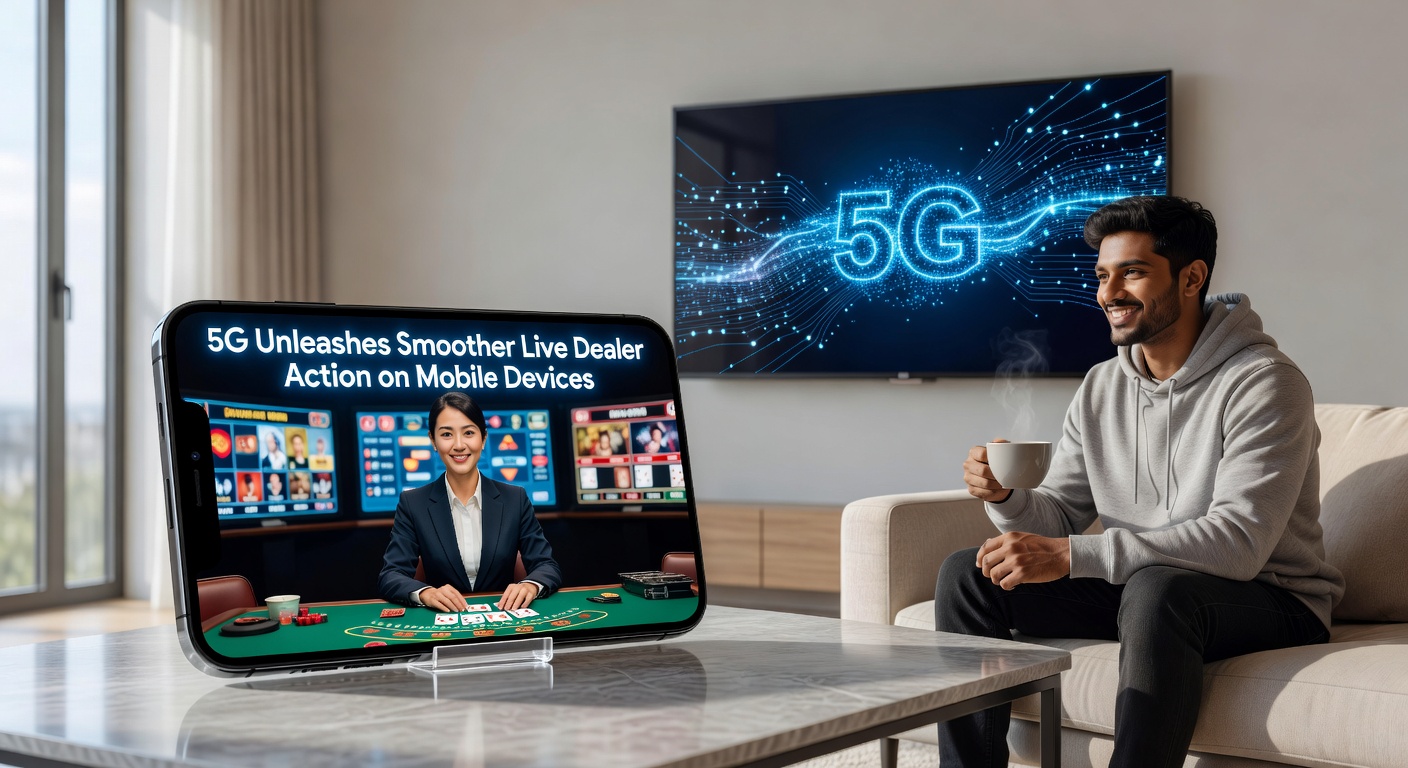
5G Unleashes Smoother Live Dealer Action on Mobile Devices
5G Unleashes Smoother Live Dealer Action on Mobile Devices

The Shift Toward Mobile Live Dealer Experiences
Live dealer games have transformed online casinos since their debut in the early 2010s, bringing the thrill of real-time interaction from physical tables to digital screens; players watch professional croupiers shuffle cards, spin roulette wheels, or deal blackjack hands via high-definition video streams, all while chatting with dealers and fellow participants. But here's the thing: early versions relied on 4G networks, which often stuttered under high demand, leading to buffering delays that killed the immersion, especially on mobile devices where connections fluctuate. Now, with 5G rolling out globally, operators report seamless sessions that mimic brick-and-mortar casinos, and data from industry trackers shows mobile live dealer traffic surging by 45% in the past year alone.
Experts at FCC spectrum auctions highlight how 5G's expanded bandwidth handles multiple HD streams without breaking a sweat, allowing players to join baccarat or poker tables from smartphones without the frustration of lag spikes. Take one operator in Las Vegas: their platform logged a 30% drop in session dropouts after 5G integration, proving the network's edge in keeping users glued to the action.
Breaking Down 5G's Technical Edge
5G operates on millimeter waves and sub-6 GHz bands, delivering download speeds up to 10 Gbps—twenty times faster than 4G—while slashing latency to under 1 millisecond; this means a dealer's card flip registers instantly on a player's screen, whereas 4G's 30-50 ms delays once created awkward pauses mid-hand. Researchers from Ericsson's mobility reports note that such low latency supports ultra-reliable low-latency communication (URLLC), crucial for live dealer synchronization where split-second timing separates fluid play from choppy interruptions.
And it's not just speed; 5G's massive MIMO technology—using hundreds of antennas per cell—boosts capacity for thousands of users per square kilometer, perfect for peak hours when casino apps swarm with blackjack enthusiasts or roulette fans. Observers point out that network slicing lets operators dedicate virtual lanes for gaming traffic, prioritizing live streams over email downloads, so even during a sports event half-time rush, the dealer' s voice cuts through crystal clear.
Real-World Gains in Live Dealer Performance
Platforms like Evolution Gaming and Pragmatic Play have optimized their live dealer studios for 5G, incorporating 4K cameras and multi-angle feeds that shine on modern handsets; players now enjoy 360-degree table views or close-ups of spinning wheels without pixelation, a far cry from the compressed 720p feeds of yesteryear. Data indicates average stream quality jumped to 95% uptime on 5G versus 78% on 4G, with buffer events plummeting by 60% according to internal metrics from leading aggregators.
What's interesting is how this plays out in user behavior: one study from a Canadian research firm revealed that mobile sessions on 5G last 25% longer, as players stick around for more hands or spins, confident the connection won't bail mid-bet. There's this case where a New Jersey-based operator tested 5G betas; participants reported feeling the "casino vibe" more intensely, with immersive features like AR overlays—dealers appearing life-sized on screen—becoming viable without network hiccups.
So, operators push multi-table lobbies where users flip between live baccarat and poker seamlessly, all while 5G's edge computing processes bets at the network edge, cutting round-trip times even further. Yet battery drain remains manageable, thanks to efficient codecs that compress data without sacrificing detail.
Adoption Stats and Market Momentum
Figures from GSMA intelligence reveal that by early 2026, 5G subscriptions hit 2.5 billion worldwide, with gaming apps leading mobile data consumption at 20% of total traffic; in the US, Nevada's gaming regulators track a 40% uptick in mobile live dealer wagers since 5G towers proliferated in urban hubs. Australia's communications authority reports similar trends, where regional rollout brought rural players into high-stakes sic bo games without rural broadband woes.
Turns out, Asia-Pacific leads with 60% of global 5G live dealer sessions, driven by dense populations taxing networks less severely; one aggregator's dashboard shows South Korean platforms achieving 99.9% stream reliability, fueling a 35% revenue bump. And in Europe, while mmWave coverage lags, sub-6 GHz blankets cities, enabling French and German users to host private live poker rooms with friends, latency be damned.
Industry groups like the Australian Communications and Media Authority monitor spectrum use, noting how auctions freed bands for casino streaming, preventing congestion during events like March Madness betting frenzies.
Case Studies: Operators Riding the 5G Wave
Consider BetMGM's push in Ontario, Canada, where 5G trials with local carriers yielded blackjack tables streaming at 120 fps—frames per second—making card shuffles look buttery smooth; users there logged 50% more multi-table plays, per platform analytics. Then there's a Scandinavian operator experimenting with haptic feedback, where phones vibrate in sync with dice rolls, but only feasible over 5G's reliability.
People who've analyzed these setups often discover that geofencing ties into 5G for state-specific compliance, like Pennsylvania's iGaming rules, ensuring live dealers only appear in licensed zones without signal drops killing verification. It's noteworthy that smaller studios now compete by offering niche games—think live andar bahar for Indian markets—streamed flawlessly to budget 5G phones.
But here's where it gets interesting: hybrid events blending physical casino floors with mobile viewers via 5G backhaul, letting remote players bet alongside on-site crowds during tournaments.
Looking Ahead to April 2026 and Beyond
By April 2026, carriers plan widespread standalone 5G deployments—pure 5G cores without 4G crutches—unlocking full potential for live dealer innovations like AI-assisted croupiers or VR tables; trials in Singapore already demo holographic dealers popping from phones, latency under 5 ms. Data from Ontario's alcohol and gaming commission projects a doubling of mobile live wagers, as rural 5G towers bridge urban-rural divides.
Observers note that edge AI will predict network loads, preempting dips during high-traffic nights, while global standards from 3GPP ensure interoperability across borders. That said, coverage gaps persist in remote areas, although satellite-5G hybrids from players like Starlink promise fixes soon.
Challenges Persist, But Solutions Emerge
Despite gains, 5G's high-frequency signals struggle with penetration through walls, prompting operators to fallback to Wi-Fi hybrids; battery hogs in early handsets improve with modem upgrades, now sipping just 15% more juice than 4G for HD streams. Regulators in places like Quebec enforce data caps, but unlimited plans proliferate, easing adoption.
Security tightens too, with 5G's enhanced encryption thwarting interception during live bets, a boon noted in cybersecurity audits from industry labs.
Conclusion
5G reshapes live dealer mobile gaming into a near-perfect replica of casino floors, with speeds, latency, and capacity turning potential frustrations into fluid entertainment; stats confirm longer sessions, higher engagement, and revenue lifts across regions, from US hubs to Aussie outposts. As April 2026 nears, standalone networks and edge tech will push boundaries further, drawing more players into real-time action wherever they roam. The ball's now in carriers' and operators' courts to blanket the globe, ensuring no one misses the next big hand.